
Holiday Meals on a GLP-1: Boundaries Without a Long Explanation
The holidays come with second helpings, family traditions and very personal questions. Here are short, warm boundary lines for each kind of relative, plus a plan for long days, travel and leftovers.
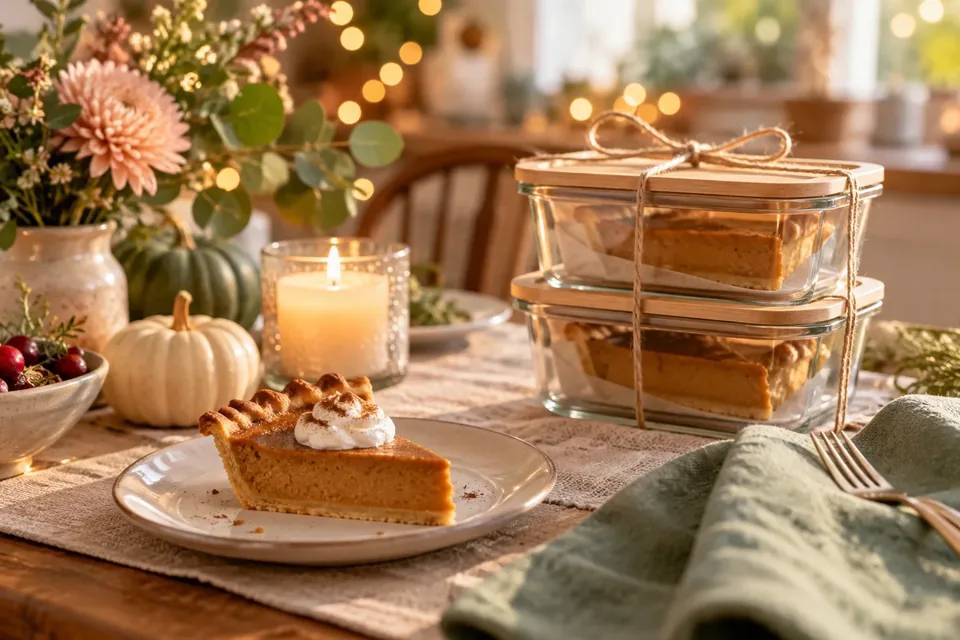
You can get through holiday meals on a GLP-1 without explaining your appetite, your medicine or your body to anyone. All you need is one short, kind sentence for each kind of relative, and a simple plan for the long, food-heavy days.
The holidays are a special case. Restaurant dinners have a bill and an ending. Holidays have Grandma's stuffing, a cousin who weighs everyone with their eyes, three days under one roof and a fridge full of foil. Here's how to handle it.
Why do holiday meals feel harder on a GLP-1?
A dinner out is one meal. A holiday is a marathon of eating that comes with feelings attached.
- Food is love, made by hand. Turning down a stranger's fries is easy. Turning down the pie your aunt bakes once a year feels like turning down your aunt.
- Everyone notices plates. At a long table, a small helping gets seen.
- The questions repeat. You answer "Are you feeling OK?" at lunch, again at dinner, and once more at the leftovers breakfast.
- Your routine goes out the window. Travel, late meals and odd hours can make it easy to forget water, a meal or a scheduled dose.
You don't need a new personality for the season. You need a few prepared lines and a bit of logistics.
What can I say when someone pushes food?
Keep it short, warm and finished. Every extra sentence is a door someone can walk through. Here's a cheat sheet by relative type.
| Who | What they say | Short, kind reply |
|---|---|---|
| The proud cook | "You barely touched my sweet potatoes!" | "They're as good as ever. Can I take some home for tomorrow?" |
| The second-helping enforcer | "Go on, have more, it's a holiday." | "I'm happily full. Save me a corner of pie for later?" |
| The worried parent | "Are you sick? You're eating like a bird." | "I'm fine, really. I'll tell you if anything's wrong." |
| The plate auditor | "Is that all you're having?" | "That's my plate today." Then ask them about their trip. |
| The tradition keeper | "You always have two slices!" | "I want one slice I really enjoy. Pass me the good one?" |
| The cousin who read a headline | "Is this the Ozempic thing?" | "I'd rather not talk health at dinner. How's the new job?" |
Three moves that help:
- Praise the dish, not the portion. "This is the best one yet" lands better than "I can't eat much."
- Ask for leftovers. Taking food home tells the cook you love it, and you get to eat it when you're hungry.
- Change the subject on purpose. Have one question ready about their kids, garden, team or travel. People love talking about themselves more than about your plate.
If you've decided to tell family about your medicine, our guide on how to tell family or coworkers you're taking a GLP-1 has scripts for that talk. This post is for the days you'd rather not have it over turkey.
How do I answer nosy questions about my weight or medicine?
You get to choose a different amount of detail for each person. Your sister might get the whole story. Your uncle's new partner gets "I'm doing well, thanks."
Try these, from least to most detail:
- The pass: "I'd rather not talk about my body at the table."
- The vague: "I'm working on my health with my doctor and it's going well."
- The open: "Yes, I'm on a GLP-1. Happy to talk about it later, just not over dinner."
If someone keeps going, repeat the same line in the same calm voice. Saying it a second time isn't rude. It's simply the answer. And if a remark stings, you can leave the table for a minute. "I'm going to grab some air" is a full sentence.
For a deeper look at why these comments hurt and how to handle someone close to you, see being judged for using GLP-1.
How should I plan a long holiday day?
Holiday days often mean late lunches, grazing and dinner at 8 p.m. A loose plan keeps you comfortable without making you the family nutritionist.
- Eat something before you go. Arriving starving and then facing a giant plate is a common recipe for feeling overly full.
- Choose favorites first. Walk the buffet and pick the two or three dishes you actually look forward to all year. Skip the store-bought rolls.
- Use a small plate. You can go back if you're still hungry. Going back is easier than leaving a full plate on the table.
- Pace with a glass of water. It gives your hands something to do between bites. If you get nauseated, our guide to nausea on GLP-1 covers food tips and when to call for help.
- Think about alcohol ahead of time. Holiday drinks are everywhere, and so is pressure to take one. If you have questions, read alcohol while taking a GLP-1 and ask your prescriber what fits you.
- Stick to your medicine schedule. If travel or the holiday falls on dose day, don't guess. Each medicine has its own label rules for late or missed doses, and our post on missed GLP-1 doses explains them. Your pharmacist can help you plan ahead.
Staying with family? Our guide to traveling with GLP-1 medication covers storage questions, like where your pen goes in someone else's fridge.
What should I do with all the leftovers?
Leftovers are the hidden gift of a smaller appetite. Your favorite dish shows up again on Saturday, when you actually want it. Just keep them safe. The CDC says to:
- Get leftovers into a fridge at 40°F or colder within 2 hours of cooking, or within 1 hour if food sat somewhere above 90°F.
- Cut big pieces, like a turkey, into smaller ones so they cool faster. Hot food can go straight into the fridge.
- Eat cooked turkey and dishes made from it within 3 to 4 days, or freeze them.
- Reheat leftovers to 165°F.
Pack small containers while everyone's still clearing plates. A single slice of pie in a container is a treat. A whole pie on the counter may just make you feel guilty. If guilt about wasting food is your thing, our piece on smaller appetites and leftovers is for you.
How can I help someone else at the table?
Maybe you're not the one on a GLP-1, but your sister is, and your dad keeps commenting on her plate. You can be the one who steers the conversation somewhere else.
- "Let's not do a health check-in at dinner. Who's hosting next year?"
- "Everyone's plate is their own business. Pass the cranberry sauce?"
- Later, in private: "That got awkward. Want me to change the subject if it comes up again?"
Don't explain her treatment for her, and don't share her news. Just making the room a little safer is the biggest help you can give.
A two-minute check-in after the meal
When the day winds down, it helps to jot down how it went. What felt good? What sat heavy? Which line worked on Uncle Rob? A note now makes next year easier. If you track in GLPily, the daily check-in and journal are good places for that note, and you can log any symptoms next to it.
Holidays are about people. Your plate can be any size you like, and you still belong at the table.
Common questions
Do I have to tell my family I'm on a GLP-1 before a holiday?
No. Your health information belongs to you. You can share it with no one, with one person or with everyone. Pick a line like "I'd rather not talk health at dinner" and use it for anyone you'd rather not tell.
Is it rude to leave food on my plate at a holiday dinner?
Most hosts care more about you enjoying the meal than about an empty plate. Take small portions, praise the dish and ask to take some home. That usually reads as a compliment, not a rejection.
What if my dose day falls on the holiday?
Don't change your schedule on a guess. Check the prescribing information for your specific medicine and ask your pharmacist or prescriber how to plan around travel or a busy day.
How long can I keep holiday leftovers?
The CDC says to refrigerate within 2 hours and eat cooked turkey and dishes made with it within 3 to 4 days, or freeze them for longer. Reheat to 165°F.
Sources and further reading
This article is general education, not medical advice, and hasn’t replaced a conversation with your prescriber. Never change, skip or stop a medicine based on an article or an app. If you have severe or worrying symptoms, get medical help. Written by the GLPily Editorial Team from the sources listed above.
Make your GLP-1 journey easier to track 💚
Keep your shots, weight, food, water and symptom notes together with GLPily, and meet Pily, the little coach who answers from your own logs.


- Shot tracking
- Water & symptoms
- Weight trends
- Journal
- Food scanner
- Progress photos