
Smaller Appetite on GLP-1? How to Handle Leftovers Without Guilt
Half your plate is left and the old 'clean your plate' voice is loud. Here's how to quiet the guilt, keep leftovers safe and make tomorrow's lunch the hero of the story.
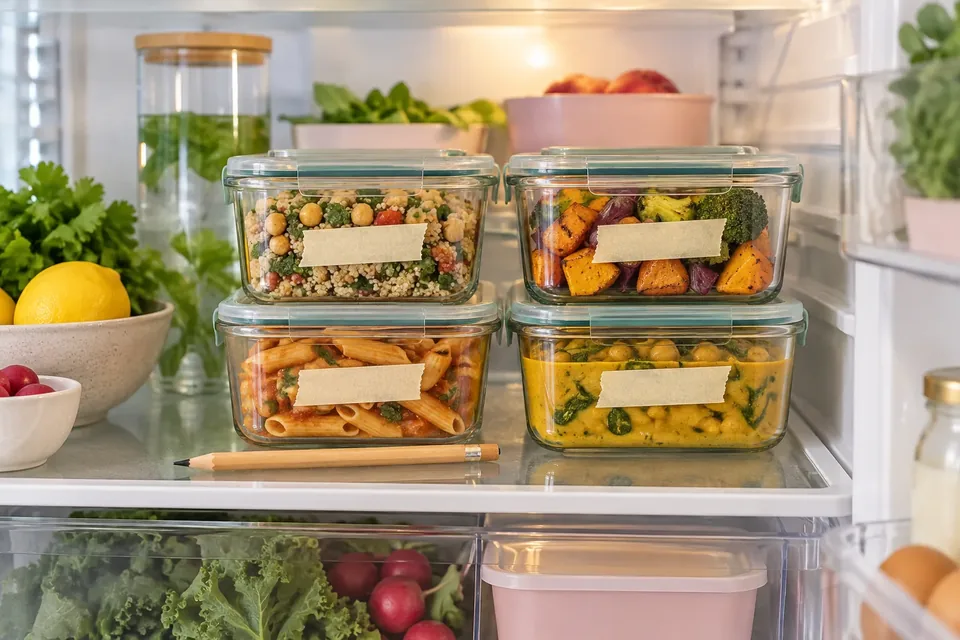
If your appetite has gotten smaller on a GLP-1 and you feel guilty every time food is left on your plate, you're in good company. You don't have to finish it. Box it safely, plan for it, and treat leftovers as tomorrow's meal, not as evidence that you wasted something. This guide covers both halves: the guilt in your head and the containers in your fridge.
Why leftover guilt hits so hard on a GLP-1
You've probably heard at least one of these growing up: clean your plate. There are people who'd be grateful for that. Don't waste money. Those voices didn't go anywhere just because your appetite changed.
Now they collide with a new reality. Many people on GLP-1 medicines notice they feel full sooner. Restaurant and recipe portions didn't change, though, so the gap shows up on your plate every day. Guilt usually comes in three flavors:
- Waste guilt: "Throwing food away is wrong."
- Money guilt: "I paid $22 for this pasta."
- Social guilt: "The cook / my partner / the server will think I didn't like it."
Each one has a practical answer, and none of them is "force it down."
Is it okay not to finish your plate on a GLP-1?
Yes. Eating past full doesn't rescue the food. It just moves the problem into your stomach. There's also a comfort reason to stop: a 2025 joint advisory from four nutrition and obesity medicine societies notes that vomiting is more likely after large meals. It suggests smaller meals when side effects are an issue.
Here are some reframes that actually help:
| The guilty thought | A more useful thought |
|---|---|
| "I'm wasting food." | "I'm storing food. It's lunch tomorrow." |
| "I wasted money." | "I bought two meals for the price of one." |
| "The cook will be offended." | "I'll tell them what I loved and ask to take some home." |
| "I should be able to finish this." | "The portion was made for a different appetite." |
If leaving food triggers more than mild guilt, like anxiety, rules you can't break, or a history of disordered eating, that deserves real support. Please read GLP-1 medicines and eating-disorder history and talk with your care team.
How to keep leftovers safe
The fastest way to turn a smart leftover into actual waste is forgetting it in the fridge. The government food-safety basics:
| Step | The rule | Source |
|---|---|---|
| Get it cold | Refrigerate within 2 hours, or 1 hour if it's above 90°F (hot car, patio). That includes restaurant doggie bags and takeout. | FDA, CDC |
| Fridge temperature | Keep the fridge at 40°F or below. | FDA, CDC |
| How long it keeps | Most cooked meat and poultry dishes: 3–4 days. Gravy and broth: 1–2 days. | FDA storage chart |
| Freeze instead | Cooked meat dishes: about 2–3 months in the freezer, for best quality. | FDA storage chart |
| Reheat | Reheat leftovers to 165°F, checked with a food thermometer. | CDC |
Two habits make this effortless:
- Ask for the box at the start. When the food arrives, box half before you start eating. You decide the portion once, calmly, instead of negotiating with yourself bite by bite.
- Date the lid. A strip of masking tape and a marker beats sniff tests.
Turn leftovers into planned meals
The mindset shift that kills guilt fastest is to stop calling them "leftovers" and start calling them "lunch."
The restaurant split. Order the dish you actually want. Box half right away. Tomorrow you've got a ready-made meal. Some people find it easier to order an appetizer as a main instead. Both are fine. Our portion sizes guide has more on making smaller servings feel satisfying.
The remix. Leftovers don't have to be a sad repeat:
- Roast chicken → wrap with greens and hummus
- Half a burrito bowl → tossed with eggs into a breakfast scramble
- Takeout curry → spooned over a baked potato or extra rice
- Pasta → a frittata (genuinely delicious, ask any Italian grandmother)
Cook small on purpose, or cook big on purpose. Either halve recipes, or cook a full batch and freeze single portions right away. Single-serving containers turn tomorrow's "I'm not hungry enough for a whole meal" into a grab-and-go option.
Make protein the part you keep. If you can only eat part of a meal, the 2025 advisory suggests protein-rich foods can be eaten first. When you box leftovers, make sure the protein part comes home too. See high-protein meals that taste good for ideas.
Mind the budget. If your grocery spending hasn't adjusted to your appetite, try buying smaller packs, using the freezer more and planning "leftover nights." Our GLP-1 budgeting tips go deeper.
When a smaller appetite becomes a problem
A smaller appetite is often expected on these medicines. Not eating enough is something else. Contact your prescriber if you:
- Regularly can't finish even small meals and feel weak, dizzy or exhausted
- Can't keep food or fluids down, or are vomiting repeatedly
- Notice signs of dehydration, like very dark urine or not peeing much
- Are skipping meals out of fear, not lack of hunger
The goal isn't "eat as little as possible." The 2025 advisory flags nutrient shortfalls and lean-mass loss as real risks of eating less, which is why it emphasizes protein and nutrient-dense foods.
Tracking can help you tell the difference. If you log meals and water, you'll see whether "small portions" is actually adding up to enough across the day. GLPily's food scanning and water log can show that at a glance, and a short note in the journal ("couldn't finish lunch, felt queasy") gives your clinician real data instead of guesswork.
Common questions
How long are restaurant leftovers safe to eat?
Refrigerate them within 2 hours (1 hour if it's above 90°F). FDA's storage chart lists most cooked meat and poultry dishes at 3–4 days in the fridge. When in doubt, throw it out.
Is it wasteful to throw away food I can't finish?
It's better to plan for leftovers than to bin them, but eating past full doesn't prevent waste. It just makes you uncomfortable. Box it early, date it, and eat or freeze it within a few days.
How do I stop feeling guilty about not finishing my plate?
Name the guilt (waste, money or social), then answer it practically. Box half early, frame it as tomorrow's meal, and give the cook a specific compliment. Our piece on how GLP-1 treatment can change your relationship with food explores the bigger picture.
Should I worry if I'm barely eating?
If you can't eat or drink enough, feel weak or dizzy, or keep vomiting, contact your prescriber. Smaller is common. Not enough isn't something to wait out.
Sources and further reading
This article is general education, not medical advice, and hasn’t replaced a conversation with your prescriber. Never change, skip or stop a medicine based on an article or an app. If you have severe or worrying symptoms, get medical help. Written by the GLPily Editorial Team from the sources listed above.
Make your GLP-1 journey easier to track 💚
Keep your shots, weight, food, water and symptom notes together with GLPily, and meet Pily, the little coach who answers from your own logs.


- Shot tracking
- Water & symptoms
- Weight trends
- Journal
- Food scanner
- Progress photos