
GLP-1 and the Food Industry: What the Evidence Shows So Far
A large study of real grocery receipts found households spent about 5% less on food after someone started a GLP-1. Here's what that study shows, what 'GLP-1 friendly' labels really mean, and which headlines are still guesses.
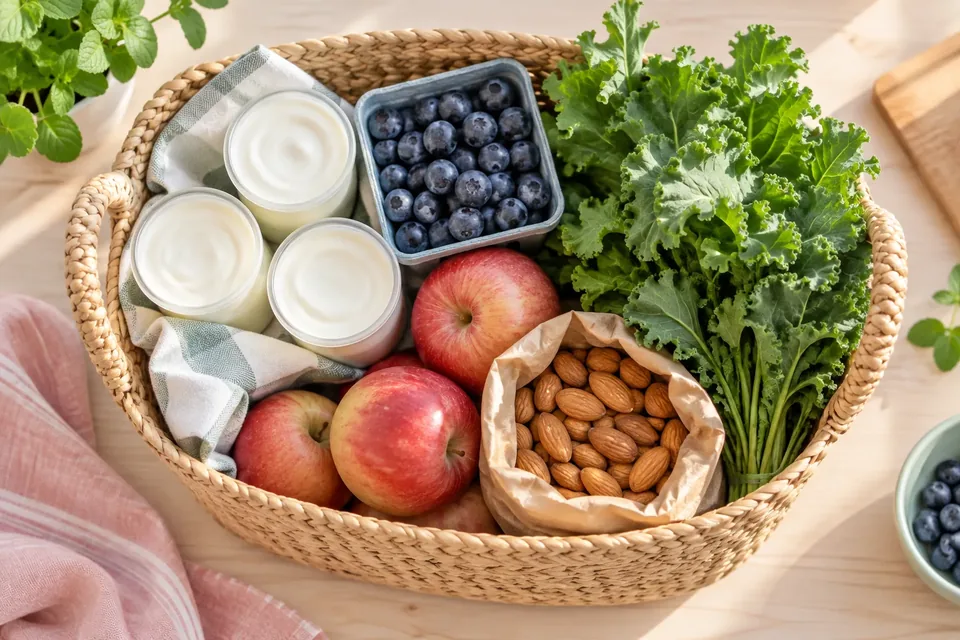
GLP-1 medicines are changing how some households shop, and there's now real evidence for it. A large Cornell study of grocery receipts, published in December 2025, found that households spent about 5.3% less on groceries within six months of someone starting a GLP-1, with the biggest drops in snacks and sweets. But many bolder headlines about "the end of snacking" or a whole industry being transformed are still forecasts, not facts.
Here's how to tell the two apart, and what it means for your own cart.
How many people are taking GLP-1s?
Enough that food companies are paying attention. In a KFF poll run in late October and early November 2025, 18% of U.S. adults said they had ever taken a GLP-1 drug and 12% said they were taking one at the time. That's up from KFF's May 2024 poll. Not all of them use it for weight loss: about 30% of users said they took it mainly to lose weight. Many others take it for diabetes or another condition.
In the Cornell team's own data, the share of U.S. households with at least one GLP-1 user rose from about 11% in late 2023 to more than 16% by mid-2024.
What did the big Cornell grocery study find?
The study, "The No-Hunger Games," by Sylvia Hristakeva and Jura Liaukonyte of Cornell with Leo Feler of the market research firm Numerator, was published in the Journal of Marketing Research on December 18, 2025. It's useful because it uses actual purchase data, not just what people say they buy. The researchers linked survey answers about GLP-1 use with transaction records from a panel of about 150,000 U.S. households.
Key findings, as reported by Cornell:
| What changed | Approximate change within 6 months |
|---|---|
| Total grocery spending | Down about 5.3% |
| Grocery spending, higher-income households | Down more than 8% |
| Fast food and coffee shops (limited-service restaurants) | Down about 8% |
| Savory snacks (chips and similar) | Down about 10% |
| Sweets, baked goods, cookies | Large decreases |
| Staples like bread, meat and eggs | Also down |
| Yogurt, fresh fruit, nutrition bars, meat snacks | Modest increases |
Two more details matter:
- It lasted, but faded. Among people who kept taking the medicine, lower food spending lasted at least a year, though the drop got smaller over time.
- It reversed after stopping. About a third of users stopped during the study. After that, spending went back to about where it was before, and baskets got slightly less healthy, partly from more candy and chocolate.
The authors were clear about a limit: the study can't fully separate the drug's effect from other changes people make when they start treatment, like a new diet plan. They pointed to appetite reduction as a likely key reason, given the clinical evidence and the reversal after stopping. If you want to understand why studies like this are useful but different from clinical trials, see real-world data vs randomized trials.
What have food companies actually done?
Some things are documented, with dates and press releases. Here are two clear examples:
Nestlé's Vital Pursuit (announced May 21, 2024). Nestlé USA announced a line of frozen bowls, pizzas and sandwich melts described as "a companion for GLP-1 weight loss medication users." The release said the 12 launch items would be high in protein, a good source of fiber, portioned for a smaller appetite and priced at a suggested $4.99 or less, with stores getting them in the fourth quarter of 2024.
Conagra's Healthy Choice badge (announced December 12, 2024). Conagra said that starting in January 2025, 26 Healthy Choice meals would carry an "On Track" badge calling them "GLP-1 Friendly." Its criteria were high protein, low calorie and a good source of fiber. One detail is easy to miss: Conagra said no changes were made to the meals themselves. The food stayed the same, and the packaging got a new label.
That's the core lesson. A product launch or a new badge proves a company made a business decision. It doesn't prove the product works better for people on GLP-1s, or that everyone on these medicines wants it.
What does "GLP-1 friendly" on a label actually mean?
Not much, legally. FDA regulations define certain nutrient content claims with exact rules. For example, a food can say "high" in a nutrient if one serving has 20% or more of the Daily Value, and "good source" if it has 10% to 19%. Meals and main dishes have their own rules. "GLP-1 friendly" isn't one of those defined terms. It's a marketing phrase, and each company decides what it means.
So when you see it:
- Flip to the Nutrition Facts panel. Check protein, fiber, calories and serving size yourself.
- Look at the portion. Smaller portions can be handy if your appetite is smaller. They can also mean less food for the price.
- Compare the price per serving with a similar meal that doesn't have the badge.
- Remember what your body tells you. If a food sits badly, the badge doesn't change that.
Our GLP-1 grocery list and high-protein meals guides are a good place to plan around food you'll actually enjoy, badge or no badge.
Which GLP-1 food headlines are still guesswork?
Here's a quick way to sort the claims you'll see:
| Claim | Evidence level |
|---|---|
| "Households with a GLP-1 user spend less on groceries." | Supported by large purchase-data research |
| "Snack and sweet purchases drop the most." | Supported in the same study |
| "Company X launched a GLP-1 product line." | Documented in company announcements |
| "This product is better for GLP-1 users." | Usually unproven. It's a marketing claim unless tested |
| "GLP-1s will shrink the snack industry by X% by 2030." | Forecast. Depends on future prices, coverage and use |
| "Everyone on GLP-1s eats only protein bars now." | Stereotype. Habits vary widely |
Forecasts aren't bad. They're just guesses with spreadsheets. They depend on things nobody knows yet, like how prices change, how many people get coverage and how many people stay on treatment. (Remember, about a third of users in the Cornell study stopped.) Our guide on reading a GLP-1 study headline in five minutes works for business news too.
What does this mean for you at the grocery store?
Probably less than the headlines suggest, and that's good news. You don't need special "GLP-1 food." People in the Cornell study bought a bit more yogurt and fresh fruit and fewer chips. That isn't a rule, but it matches what many people find: when you're eating less, you often want each bite to count.
A few practical ideas:
- Expect your grocery bill to change. If you're buying less, you may have room in the budget for better-quality protein or produce. Our GLP-1 budgeting tips can help.
- Shop for your actual appetite. Smaller packages and single servings can cut down on waste.
- Keep an eye on nutrition, not just calories. With a smaller appetite, protein and fiber matter. Your prescriber or a registered dietitian can help you set goals.
- Scan, don't guess. If you use GLPily, the food scanner gives meals a GLPily Grade so you can compare options quickly. Use it as a guide, not gospel.
The food industry story is worth watching. Just keep two piles: what has been measured, and what is being predicted.
Common questions
Do people on GLP-1s really spend less on food?
The best evidence so far says yes, on average. A Cornell study published in December 2025 found households with a GLP-1 user cut grocery spending by about 5.3% within six months, with bigger drops in snacks and sweets.
What does "GLP-1 friendly" mean on food packaging?
It's a marketing phrase, not a term defined in FDA regulations. Each company sets its own criteria. Conagra's version, for example, meant high protein, low calorie and a good source of fiber. Always check the Nutrition Facts panel.
Do I need special food while taking a GLP-1?
No. Regular foods that give you enough protein, fiber and fluids are generally the focus. Ask your prescriber or a registered dietitian about goals that fit your health.
Does food spending go back up if you stop a GLP-1?
In the Cornell study, yes. After people stopped the medicine, their household food spending moved back toward pre-treatment levels.
Sources and further reading
- Cornell Chronicle: Ozempic is changing the foods Americans buy (Dec 2025)
- KFF Health Tracking Poll: Prescription Drug Costs, Views on Trump Administration Actions, and GLP-1 Use (Nov 2025)
- Nestlé USA: Nestlé introduces Vital Pursuit brand (May 21, 2024)
- Conagra Brands: Badges on select Healthy Choice products for GLP-1-friendly options (Dec 12, 2024)
- 21 CFR 101.54: Nutrient content claims for "good source," "high," "more," and "high potency" (Cornell LII)
This article is general education, not medical advice, and hasn’t replaced a conversation with your prescriber. Never change, skip or stop a medicine based on an article or an app. If you have severe or worrying symptoms, get medical help. Written by the GLPily Editorial Team from the sources listed above.
Make your GLP-1 journey easier to track 💚
Keep your shots, weight, food, water and symptom notes together with GLPily, and meet Pily, the little coach who answers from your own logs.


- Shot tracking
- Water & symptoms
- Weight trends
- Journal
- Food scanner
- Progress photos