
A Practical GLP-1 Grocery List for Busy Weeks
Build a flexible GLP-1 grocery list with protein foods, produce, pantry staples and quick meal options. Personalize it to your preferences.
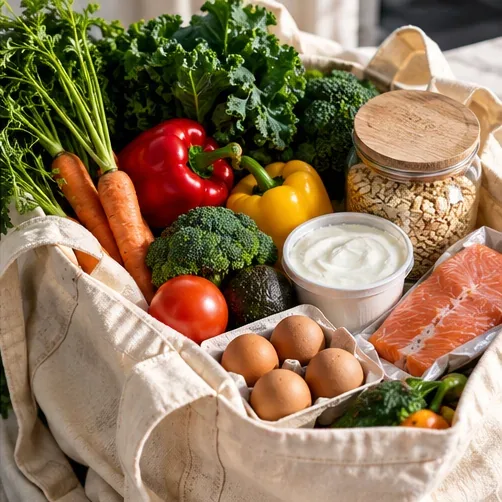
Grocery shopping can feel like another job when you are tired, busy or unsure what you will feel like eating. Rather than searching for a rigid “approved foods” list, build a flexible basket from foods you enjoy, can afford and can comfortably tolerate.
This list is a starting point, not a medical diet. Personal needs differ, and your clinician or dietitian can help tailor choices if you have additional health or nutrition requirements.
Protein options
Choose several that you would genuinely eat:
- Eggs
- Yogurt or cottage cheese, if you enjoy dairy
- Chicken, turkey or other preferred meats
- Fish, including canned options
- Tofu, tempeh and edamame
- Beans, lentils and chickpeas
- Nuts, seeds or nut butter
You do not need to buy every item. Two or three dependable options may be enough for one week.
Fruit and vegetables
Pick fresh, frozen or canned produce, ideally with little or no added sugar or salt, according to your budget, space and prep energy. Examples include berries, apples, bananas, citrus, leafy greens, broccoli, carrots, tomatoes, peppers and frozen vegetable mixes. If washing and chopping makes you less likely to use something, pre-washed or pre-cut products may be worth it.
Easy pantry and grain staples
Oats, rice, whole-grain bread, potatoes, crackers, pasta, canned beans, soup, olive oil, herbs, spices and sauces can turn a few ingredients into different meals. Use the versions you like and that fit your needs.
Quick options for low-energy days
Keep a few backup choices available, such as soup with beans, yogurt and fruit, eggs and toast, a microwave rice bowl with tofu, or a frozen meal you enjoy. Convenience food can be part of a practical routine; checking labels for sodium and added sugars can help you choose between options.
If reduced appetite or symptoms make it difficult to eat or drink enough, contact your healthcare professional rather than relying on a grocery list to solve the problem.
Copyable weekly checklist
- Two or three protein foods
- A few fruits you enjoy
- Fresh or frozen vegetables
- A grain or carbohydrate staple
- Quick meals or snacks for busy days
- Water or other unsweetened drinks that fit your hydration needs
- Flavor boosters such as herbs, spices or sauces
Make it personal
Before shopping, look at what is already in your kitchen. Choose two easy meals and one backup meal, then buy ingredients to support them. Repeating favorites is fine; variety can happen across days and weeks rather than in every single meal.
The most useful grocery plan is one you can realistically follow.
Sources and further reading
This article is general education, not medical advice, and hasn’t replaced a conversation with your prescriber. Never change, skip or stop a medicine based on an article or an app. If you have severe or worrying symptoms, get medical help. Written by the GLPily Editorial Team from the sources listed above.
Make your GLP-1 journey easier to track 💚
Keep your shots, weight, food, water and symptom notes together with GLPily, and meet Pily, the little coach who answers from your own logs.


- Shot tracking
- Water & symptoms
- Weight trends
- Journal
- Food scanner
- Progress photos