
GLP-1s and Social Drinking: Non-Alcoholic Options and Navigating Social Pressure
GLP-1 medicines may change your relationship with alcohol. Here’s how to find great non-alcoholic drinks and confidently handle social situations—without missing out.
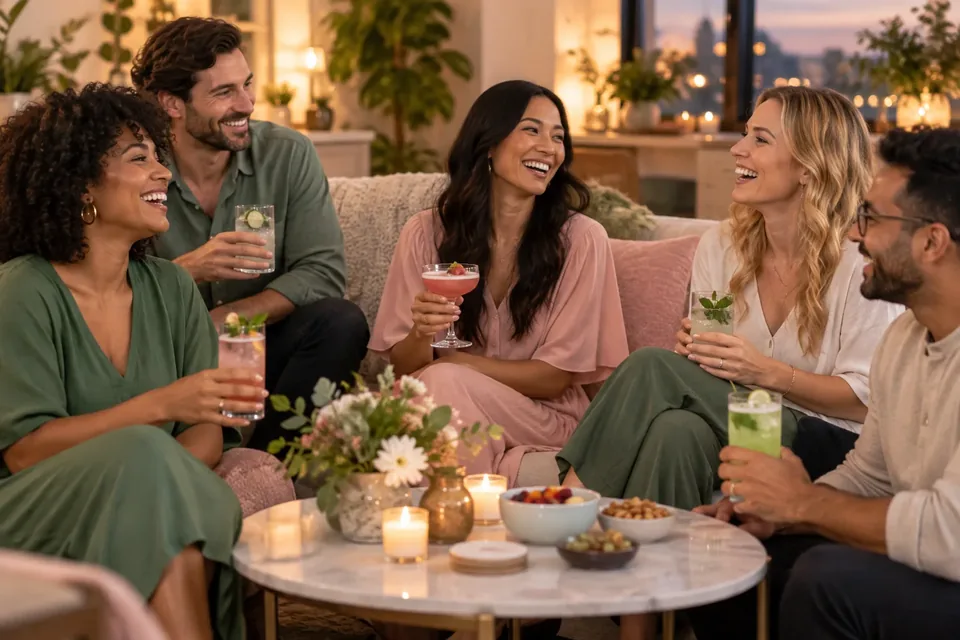
If you’re taking a GLP-1 medicine and skipping alcohol at social events, you’re not alone—and there are more options than ever to help you feel comfortable, included, and confident. Many people on GLP-1s report a shift in their desire for alcohol, and socializing without a drink in hand can feel unfamiliar at first. With a little planning, you can enjoy gatherings, find satisfying non-alcoholic drinks, and handle questions or pressure with ease.
Why GLP-1 Users Are Rethinking Alcohol
A growing body of research suggests that GLP-1 receptor agonists—like semaglutide or tirzepatide—may reduce alcohol intake and cravings for some people. A 2026 observational cohort from the Mayo Clinic found that adults starting GLP-1 therapy reduced their weekly alcohol intake by about one drink, but this effect was less pronounced after accounting for weight loss (PubMed: Alcohol Use Following GLP-1 Receptor Agonist Therapy).
Randomized trials and systematic reviews also report small reductions in drinking and alcohol cravings, especially with semaglutide, but these studies are often small and underpowered (PubMed: The effects of GLP1-RAs on alcohol-related outcomes; PubMed: Once-Weekly Semaglutide in Adults With Alcohol Use Disorder). Observational studies—including millions of participants—suggest that people on GLP-1s may have fewer alcohol-related hospitalizations and events, though these results don’t prove cause and effect (JACC: Effects of GLP-1 Receptor Agonists and Dual Agonists on Alcohol Use Disorder).
Many GLP-1 users share online that their interest in alcohol fades, they drink less, or even stop altogether (PMC: Association between GLP-1 receptor agonists use and change in alcohol consumption; Reddit: Social life change on a GLP-1). Some also report stronger next-day effects or changes in how alcohol feels. While everyone is different, it’s common to find yourself drinking less or rethinking alcohol—and wondering how to navigate social situations.
For more on the research about GLP-1s and alcohol, see GLP-1 Alcohol Cravings: What the Science Says.
Finding Your Favorite Non-Alcoholic Drinks
The rise of mocktails, alcohol-free beers and wines, and “sober curious” bars means you don’t have to settle for plain seltzer unless you want to. According to the Cleveland Clinic, non-alcoholic beers and wines can help you socialize comfortably, and “virgin” versions of classic cocktails—like mojitos or daiquiris—offer the same festive feel without the alcohol (Cleveland Clinic: Are Nonalcoholic Drinks and Mocktails Healthy?).
Here are some options to try at your next gathering:
- Mocktails: Think fresh fruit, herbs, seltzer, and citrus. A virgin mojito, non-alcoholic mule, or cucumber-lime spritz can be just as fun as their boozy counterparts.
- Non-alcoholic beers and wines: Many taste remarkably like the originals and can help you blend in if you want to avoid questions.
- Ready-made NA drinks: The non-alcoholic beverage market is booming, and there’s a growing range of sophisticated, lower-calorie options designed for adults (Trimi Health: Best Non-Alcoholic Drinks for GLP-1 Social Events).
- Temperance bars and events: In some cities, alcohol-free bars and “sober curious” gatherings are on the rise (Wikipedia: Temperance bar, Wikipedia: Sober curious).
If you’re tracking your GLP-1 journey, logging which drinks you enjoy in an app like GLPily can help you remember what works for you and discuss any new symptoms or preferences with your clinician.
For more ideas, check out Hydration on GLP-1: What Counts and Why and Easy At-Home Protein Snacks for GLP-1 Users—since some mocktails can be high in sugar, pairing with protein or choosing lower-sugar options can help you feel your best.
Handling Social Pressure: Scripts and Strategies
Not everyone will notice or care what’s in your glass—but sometimes, questions or offers can feel awkward. The National Institute on Alcohol Abuse and Alcoholism (NIAAA) suggests planning ahead for both direct pressure (being offered a drink) and indirect pressure (watching others drink) (NIAAA: Building Your Drink Refusal Skills).
Practical tips for social situations:
- Bring your own drink: Whether it’s a canned mocktail or sparkling water with lime, having something in hand can help deflect offers.
- Prepare a simple response: “I’m good with this tonight,” “I’m taking a break from alcohol,” or “I just don’t feel like drinking.” No need to explain more than you want.
- Invite a non-drinking friend: According to Cleveland Clinic advice, having an ally can make socializing easier and more comfortable (Cleveland Clinic: How to Manage Peer Pressure of Drinking).
- Suggest alternate activities: If you’re not comfortable at bars, propose coffee shops, walks, or game nights instead.
The American Psychological Association notes that “sober curiosity” is increasingly mainstream, and many adults are learning to socialize without alcohol for the first time (APA: Sober curious? Here’s how to socialize without alcohol). Practicing your script can make a big difference, and you may find that most people respect your choice—or are relieved to have an excuse to skip a drink themselves.
Building Your Comfort Zone
Shifting away from alcohol can feel like a big change, especially if your social life once centered around drinks. Peer support groups like Moderation Management offer resources for cutting back or abstaining, and you may find new routines and rituals that feel just as satisfying (Wikipedia: Moderation Management).
Remember, your reasons for skipping alcohol are your own. Whether it’s because your GLP-1 medicine changed your cravings, you’re focusing on health, or you simply prefer how you feel, there’s no wrong answer. Socializing without alcohol gets easier with practice, and you might even inspire others to join you.
Looking for more on social changes with GLP-1s? See What GLP-1 Users Wish They Knew and Before-and-After GLP-1 Stories: What Are Their Limits?.
Sources and further reading
- PubMed: Alcohol Use Following GLP-1 Receptor Agonist Therapy
- PubMed: The effects of GLP1-RAs on alcohol-related outcomes
- JACC: Effects of GLP-1 Receptor Agonists and Dual Agonists on Alcohol Use Disorder
- PubMed: Once-Weekly Semaglutide in Adults With Alcohol Use Disorder
- PMC: Association between glucagon-like peptide-1 receptor agonists use and change in alcohol consumption
- Reddit: Social life change on a GLP-1
- Cleveland Clinic: Are Nonalcoholic Drinks and Mocktails Healthy?
- NIAAA: Building Your Drink Refusal Skills
- Cleveland Clinic: How to Manage Peer Pressure of Drinking
- APA: Sober curious? Here’s how to socialize without alcohol
This article is general education, not medical advice, and hasn’t replaced a conversation with your prescriber. Never change, skip or stop a medicine based on an article or an app. If you have severe or worrying symptoms, get medical help. Written by the GLPily Editorial Team from the sources listed above.
Make your GLP-1 journey easier to track 💚
Keep your shots, weight, food, water and symptom notes together with GLPily, and meet Pily, the little coach who answers from your own logs.


- Shot tracking
- Water & symptoms
- Weight trends
- Journal
- Food scanner
- Progress photos