
Simple Home Workouts for GLP-1 Users (Even on Low-Energy Days)
Discover safe, simple home workouts for people on GLP-1 medications—even if your energy is low. Learn how to move confidently, preserve muscle, and support your health, all at your own pace.
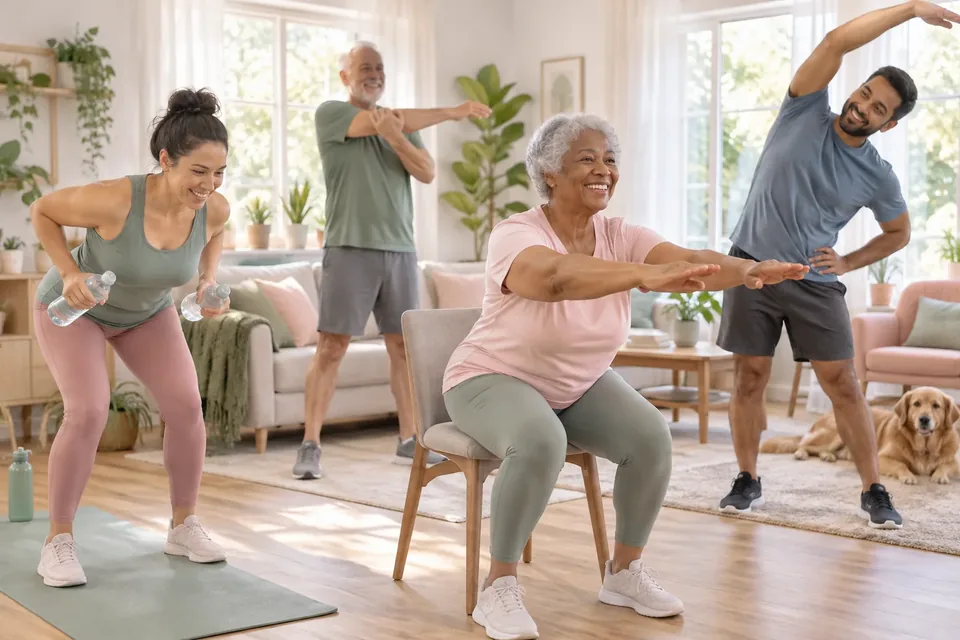
Feeling low on energy while taking a GLP-1 like semaglutide or tirzepatide? You’re not alone—and you can still move your body in safe, effective ways at home. Even if fatigue or reduced appetite makes exercise feel intimidating, simple routines can help you preserve muscle, protect your health, and support your weight loss journey.
Why Exercise Matters on GLP-1s
GLP-1 medicines can cause rapid weight loss, but that loss can include muscle as well as fat. Clinical guidance from the American Diabetes Association and European associations emphasizes that regular movement—especially strength training—helps preserve muscle and bone, improves heart health, and boosts insulin sensitivity beyond the effects of medication alone (diabetesjournals.org, health.clevelandclinic.org).
Understanding Fatigue and Energy on GLP-1s
Fatigue is a common side effect, especially in the first 4–8 weeks after starting or increasing your dose. In Wegovy weight management trials, about 11% of people reported tiredness, while self-report surveys suggest the number could be higher (healthline.com). This tiredness usually improves as your body adapts, but it can make starting or maintaining an exercise routine challenging.
If you’re experiencing persistent or severe fatigue, especially if it doesn’t improve after a few weeks or is accompanied by other concerning symptoms, speak with your clinician. For more on this, see GLP-1 Fatigue: How Long It Lasts and How to Combat It.
Key Principles for Exercising at Home on Low-Energy Days
1. Keep It Short and Simple
Experts agree: you don’t need long or intense workouts to benefit from movement. Short sessions—about 20–30 minutes—are enough to signal your body to preserve muscle, even during weight loss (flexwerkfitness.com).
- Focus on 4 basic movements: squat, hinge (like a deadlift), push (such as wall or incline push-ups), and pull (using bands or household items for rows).
- Do 2–3 sets of 8–15 reps each.
- Rest as needed between sets; quality matters more than speed.
2. Choose Low-Impact, Beginner-Friendly Moves
Low-impact routines are gentle on joints and often easier to stick with during periods of fatigue or low appetite. A 30-minute home workout designed for beginners and GLP-1 users features:
- Chair or box squats
- Incline push-ups (against a wall or sturdy surface)
- Standing rows (with resistance bands or bags)
- Seated marches or gentle step-touches
These exercises avoid floor positions and can be done with minimal equipment (youtube.com).
3. Use What You Have
You don’t need a home gym. Common household items—like a backpack filled with books for rows, a sturdy chair for squats, or water bottles for light presses—can be effective. Kettlebells, if available, are great for short, full-body workouts that target neglected muscle groups (fitandwell.com).
4. Schedule Workouts During Your Energy Peaks
Many GLP-1 users find mid- or late-morning is when they feel best. Listen to your body and plan movement during your higher-energy windows (flexwerkfitness.com). On days when fatigue is strong, even a short walk or gentle stretches count.
5. Prioritize Protein and Hydration
GLP-1s often reduce appetite and calorie intake by 20–39%, which can make it harder to get enough nutrients (diabetesjournals.org). Before and after workouts, a protein-rich snack and fluids with electrolytes (like a pinch of salt, or a sports drink) can help support muscle and energy. For more on nutrition, see High-Protein Meals on GLP-1 and Hydration on GLP-1.
Example: Two Simple Home Routines
A. 20-Minute Strength Circuit (No Equipment Needed)
- Chair or box squats (sit and stand): 2 sets of 10–15 reps
- Incline push-ups (hands on wall or counter): 2 sets of 8–12 reps
- Standing rows (bags/bands): 2 sets of 10–12 reps
- Seated marches or step-touches: 2 sets of 30 seconds
Rest 30–60 seconds between exercises. Repeat the circuit once or twice.
B. Gentle Kettlebell Flow (If You Have One)
- 40 seconds of kettlebell deadlifts
- 20 seconds rest
- 40 seconds overhead press (or substitute with water bottles)
- 20 seconds rest
- 40 seconds bent-over row
- 20 seconds rest
Repeat for 2–3 rounds, resting as needed.
How Much Should You Aim For?
Guidelines recommend 150–300 minutes of moderate activity per week (like brisk walking) and 2–3 strength sessions (diabetesjournals.org). If structured exercise feels out of reach, aim for 4,000–6,000 steps per day, or simply add small movement breaks throughout your day (pmc.ncbi.nlm.nih.gov).
Safety and Self-Tracking
- Avoid vigorous exercise right after eating; gentle walking is fine in early treatment phases (jacc.org).
- Pay attention to soreness, sleep, and how you feel during and after workouts. If you notice a steady decline in strength or performance for more than 2–3 weeks, or if fatigue becomes overwhelming, check in with your clinician.
- Logging your symptoms and workouts in a tracker app like GLPily can help you and your healthcare team spot patterns and make adjustments.
For more on tracking, see How to Track GLP-1 Progress and First Week on GLP-1: What to Track.
Moving Forward, One Step at a Time
Every bit of movement counts. Whether it’s a quick chair workout, a gentle walk around the block, or simply stretching during TV time, you’re supporting your health. Adapt routines to your energy, celebrate every effort, and remember that consistency—however it looks for you—is what matters most.
Sources and further reading
- Healthline – GLP-1 Fatigue: How Long It Lasts and How to Combat It
- American Diabetes Association – Clinician Guidance on the Benefits of Healthy Nutrition and Increased Physical Activity for People With Type 2 Diabetes Following GLP-1 Initiation
- Cleveland Clinic – Why Exercise Is Important While Taking GLP-1s
- FlexWerk – How Do You Work Out With GLP-1 Fatigue?
- Fit&Well – This Full-Body Kettlebell Workout Can Help GLP-1 Users Maintain Muscle While Losing Weight
- YouTube – 30-Minute Full Body Home Workout for Beginners, Weight Loss, and GLP-1
- JACC – 2026 AHA/ACC/ADA/ASN Guideline for the Prevention, Detection, Evaluation, and Management of Cardiovascular-Kidney-Metabolic Syndrome
- PMC – Nutritional and lifestyle supportive care recommendations for management of obesity with GLP-1-based therapies: An expert consensus statement
This article is general education, not medical advice, and hasn’t replaced a conversation with your prescriber. Never change, skip or stop a medicine based on an article or an app. If you have severe or worrying symptoms, get medical help. Written by the GLPily Editorial Team from the sources listed above.
Make your GLP-1 journey easier to track 💚
Keep your shots, weight, food, water and symptom notes together with GLPily, and meet Pily, the little coach who answers from your own logs.


- Shot tracking
- Water & symptoms
- Weight trends
- Journal
- Food scanner
- Progress photos