
Clothes Shopping on a GLP-1: What to Buy While Your Size Changes
Your jeans are falling off and you're not sure what size to buy. Here's a calm, budget-friendly plan for dressing a changing body: the bridge wardrobe, what's worth altering, and what to do with the old clothes.
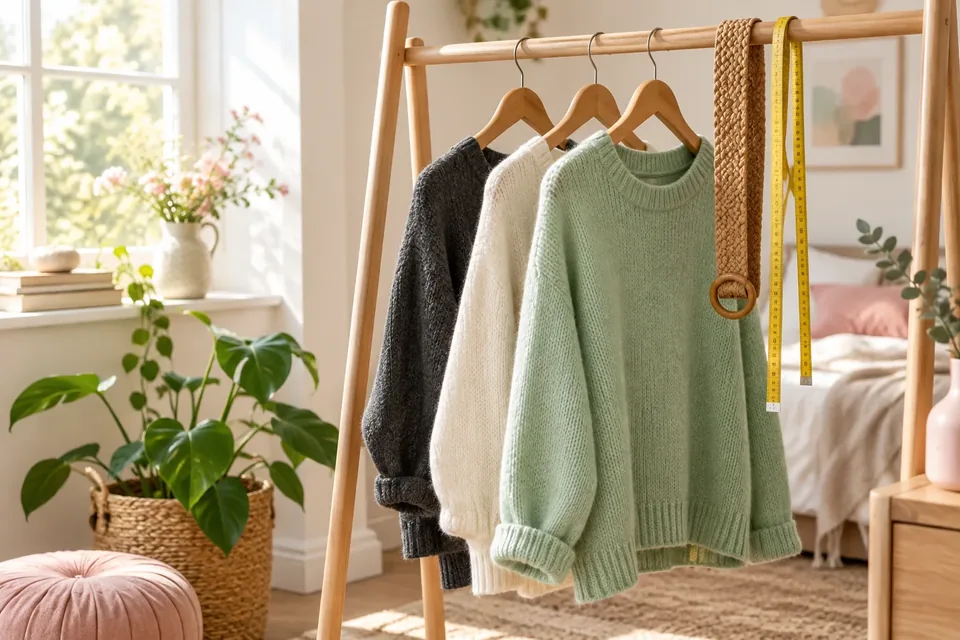
Clothes shopping during weight loss on a GLP-1 works best with a small "bridge" wardrobe: a few comfortable, adjustable pieces that fit you now, bought cheaply, altered or swapped as you go. Skip the full closet makeover until your size settles, and shop by your measurements and each brand's size chart instead of the number on the label.
If your belt has run out of holes, your work pants have started to slide and you have no idea what size you are anymore, you're in the right place.
Why is clothes shopping so confusing when your size keeps changing?
Three things make it harder than it should be.
1. Your body doesn't change evenly. Many people notice clothes fitting differently in some places before others. Your waist might move before your shoulders, or your face before your hips. One pair of pants can be baggy while a jacket still fits fine.
2. Size labels aren't standardized. In the U.S., the sizing standards that exist are voluntary. The National Institute of Standards and Technology (NIST), whose predecessor published women's sizing standards decades ago, now says it's "no longer involved" in apparel sizing standards. Industry groups like ASTM publish body-measurement tables that brands can use as a starting point for design, but brands set their own sizes. That's why you can be a 10 in one store and a 14 in the next.
3. It's emotional. A dressing room is bright, mirrored and honest. It can bring up old memories, pride, worry about loose skin, or all three at once. That's normal.
What is a bridge wardrobe?
A bridge wardrobe is a small set of clothes meant to carry you through a period of change. You'll probably outgrow it, and that's the point. It's not a forever closet.
A simple bridge wardrobe might be:
| Item | How many | Why it works |
|---|---|---|
| Pull-on pants or jeans with stretch | 2 | Waistbands with give cover a wider size range |
| Knit tops or tees | 4–5 | Stretch fabric forgives small changes |
| Wrap or tie-waist dress / button-down shirt | 1–2 | Adjustable fit at the waist |
| Cardigan or open jacket | 1 | No buttons to strain or gape |
| Belt with extra holes (or an adjustable one) | 1 | Rescues pants that are slightly big |
| Comfortable underwear and bras that fit now | As needed | The fit you notice most all day |
Mix and match these and you can get through most weeks without a mall trip.
What should I buy now, and what should I wait on?
Not everything needs replacing right away. Here's a quick guide:
| Buy now | Alter or adjust | Wait if you can |
|---|---|---|
| Underwear and bras that actually fit | Pants that are a little big at the waist | Expensive tailored suits |
| One or two pairs of pants that stay up | Shirts you love that fit loosely | A full new winter coat |
| Comfortable walking shoes if yours rub | Dresses that need a small take-in | Formal wear for a far-off event |
| Workout clothes that don't slip or chafe | Belts (add a hole at a repair shop) | Bulk buying in your "goal size" |
Two things are worth knowing about alterations. Taking clothes in (making them smaller) is usually easier than letting them out, and simple hems and waist adjustments are usually much cheaper than big structural changes. Ask a tailor for a quote before you decide. For a jacket you love, it can be worth it. For a $15 tee, probably not.
How do I know what size to buy?
Forget the number you used to be. Shop with a tape measure.
- Measure yourself at the waist, hips, chest and inseam. Write the numbers down.
- Check each brand's size chart online, and match your measurements, not your old size.
- Read the fabric. Stretch fibers like elastane or spandex give you more room to change. Rigid denim gives you less.
- Order two sizes when you're unsure, but only from stores with easy free returns. Mark the return deadline in your calendar.
- Remeasure every few weeks instead of guessing.
Bonus: those same tape-measure numbers are useful progress data. Many people notice their clothes and inches changing even when the scale is slow. See losing inches but not pounds on GLP-1. GLPily has a place for measurements and progress photos if you want them all in one spot, next to your weight.
Do looser clothes mean my GLP-1 is working?
Not necessarily, and tight clothes don't mean it isn't. Fit depends on fluid, bloating, posture, the fabric, the dryer and the brand. Clothes are a fun, real-life signal, but they're not a medical test. If you have questions about your progress, bring a broader picture to your prescriber: weight trend, measurements, energy and any lab results. Our guide on tracking GLP-1 progress beyond the scale lists what to include.
How can I shop on a budget while my size changes?
Spending full price on clothes you'll wear for three months can hurt. Try:
- Thrift and resale. Secondhand stores and resale apps are great for bridge pieces.
- Clothing swaps. Trade with friends going through their own changes, like new parents or people changing jobs.
- Basics in neutral colors. Fewer pieces that all go together means more outfits.
- Borrowing for special events. A wedding outfit you'll wear once can be borrowed or rented.
Clothes are just one part of the real cost of treatment. Our GLP-1 budgeting tips cover the rest.
What should I do with clothes that no longer fit?
You don't have to purge your whole closet the first month. Some people keep one or two meaningful pieces. Others feel lighter giving everything away. Both are fine.
If you donate, keep the IRS rules in mind. IRS Publication 526 says you generally can't deduct donated clothing unless it's in "good used condition or better," and the deduction only matters if you itemize. Keep a list of what you gave and ask for a receipt. A tax professional can help if you're donating a lot.
Other options: sell nicer items on a resale app, pass pieces to family, or give worn-out fabric to a textile recycling drop-off if your area has one.
How do I make the fitting room less stressful?
- Go at a quiet time, like a weekday morning.
- Bring a friend who makes you laugh, or go alone if that feels better.
- Take three sizes in so you're not running back and forth.
- Judge the fit, not the tag. Can you sit, reach and breathe? Then it fits.
- Take a break if it gets heavy. Coffee is allowed.
If changes like loose skin are on your mind, our guide to loose skin after GLP-1 weight loss covers what to expect and what helps. Your clothes are there to work for you. You don't owe any size a long-term commitment.
Common questions
Should I buy new clothes while losing weight on a GLP-1?
Buy a small set of comfortable, adjustable pieces that fit you now, especially underwear and pants that stay up. Hold off on expensive, tailored or formal items until your size has been steady for a while.
Why am I a different size in every store?
U.S. sizing standards are voluntary, so brands set their own sizes, sometimes starting from industry body-measurement tables. Shop by your measurements and each brand's size chart.
Is it worth getting clothes altered during weight loss?
For pieces you love and that are well made, often yes. Taking garments in is usually easier than letting them out. Ask a tailor for a price first and compare it with buying secondhand.
Can I deduct donated clothes on my taxes?
Only if you itemize, and the IRS says clothing generally must be in good used condition or better. Keep a record and receipt, and check IRS Publication 526 or a tax professional for details.
Sources and further reading
This article is general education, not medical advice, and hasn’t replaced a conversation with your prescriber. Never change, skip or stop a medicine based on an article or an app. If you have severe or worrying symptoms, get medical help. Written by the GLPily Editorial Team from the sources listed above.
Make your GLP-1 journey easier to track 💚
Keep your shots, weight, food, water and symptom notes together with GLPily, and meet Pily, the little coach who answers from your own logs.


- Shot tracking
- Water & symptoms
- Weight trends
- Journal
- Food scanner
- Progress photos