
- Blog
- Side Effects & Safety
- GLP-1 Adverse Event Reports: Why a Report Is Not Proof
GLP-1 Adverse Event Reports: Why a Report Is Not Proof
'Hundreds of reports to the FDA' sounds alarming. Here's what FDA's adverse-event database can and can't tell you, and how a real GLP-1 safety question went from reports to answer.
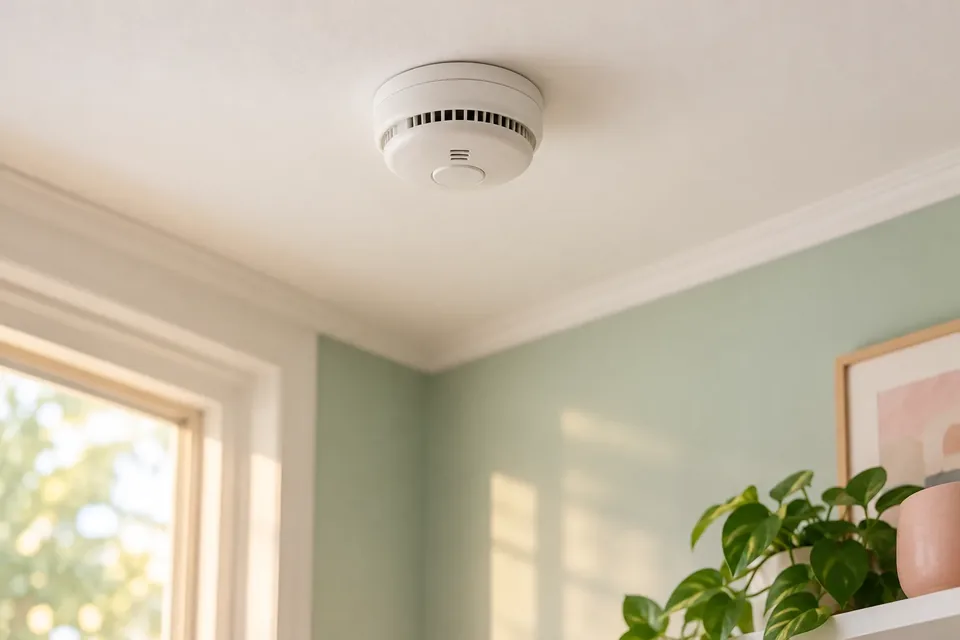
An adverse-event report means someone, whether a patient, a clinician or a drug company, suspected that a medicine might be linked to a health problem and told FDA. It does not prove the GLP-1 caused it. FDA says so directly on its own database: "Existence of a report does not establish causation." Reports are signals that start an investigation, not the result of one.
Think of them as a smoke alarm. Smoke alarms are great. They also go off when you make toast. The next step is always to look for the fire.
What is FAERS, and what is AEMS?
For years, FDA collected reports about drug side effects in the FDA Adverse Event Reporting System (FAERS). In March 2026, FDA launched the FDA Adverse Event Monitoring System (AEMS), which replaces FAERS and is folding several older reporting databases into one system. FDA's dashboard page now reads "formerly FAERS."
The name changed; the rules for interpreting the data did not. Reports come from:
- Drug manufacturers, which are required to send FDA the reports they receive
- Health professionals
- Patients and caregivers, often through MedWatch
Anyone can search the public dashboard. That's great for transparency. It's also how screenshots of report counts end up on social media without the fine print.
What does FDA say these reports cannot do?
FDA's dashboard page lists the limits clearly. In short:
- Reports don't prove causation. The problem may have come from the underlying disease, another drug or something else.
- Reports aren't verified. Submitting one doesn't mean the details were medically confirmed.
- There are many duplicates. The same event can be reported by a patient, a doctor and the manufacturer.
- Some reports are incomplete.
- Counts can't estimate incidence. FDA says the information "cannot be used to estimate the incidence (occurrence rates) of the events reported."
That last point trips up the most headlines. To know how often something happens, you need two numbers: how many people had the problem and how many people took the drug. The database only has the first, and only partly.
Spot the trick
1. "Drug A has 10 times more reports of [problem] than Drug B."
Show answer
Drug A may simply be used by 10 times more people, or have been on the market longer. Reporting habits also differ from drug to drug. Without the number of people exposed, report counts can't compare risk.2. "A woman developed [condition] two weeks after starting a GLP-1, so the drug caused it."
Show answer
Timing alone doesn't prove cause. Conditions that are common in people with obesity or diabetes will happen to some people shortly after starting any medicine. The question is whether it happens more often than it would have anyway, which takes a comparison group.3. "FDA has received hundreds of reports, so the drug is dangerous."
Show answer
Hundreds of reports can be a real signal worth investigating, or background noise among millions of users. What matters is what FDA concludes after looking at controlled data, and any action it takes, like label changes.Scoring: 3 out of 3 and you can calmly read a report-count screenshot. That's a rare superpower on the internet.
How did a real GLP-1 safety signal get investigated?
Here's the full arc, start to finish:
- The signal (July 2023). FDA began evaluating postmarketing reports of suicidal thoughts or behavior in people taking GLP-1 medicines.
- The checks. FDA reviewed case reports and then looked for controlled evidence:
- A meta-analysis of 91 placebo-controlled trials covering 107,910 patients. No increased risk of suicidal ideation or behavior, or of related psychiatric events, compared with placebo.
- A study in FDA's Sentinel system of more than 2.2 million new users, comparing GLP-1 users with people starting a different diabetes drug class. No increased risk of intentional self-harm.
- Published observational studies. FDA said "the totality of these studies does not support a causal relationship."
- The action (January 13, 2026). FDA asked companies to remove the suicidal behavior and ideation warning from Wegovy, Saxenda and Zepbound labels.
The reports did their job: they raised a question. Controlled studies answered it. That's the system working, not failing. (FDA did note that, because individual trials had few such cases, there was some uncertainty. Honest evidence usually comes with caveats.)
Why can reports undercount a real problem?
The flip side matters too. Reporting is voluntary for patients and clinicians, so plenty of real side effects never get reported.
FDA's page on unapproved GLP-1 drugs is a good example. As of May 31, 2026, FDA had received 990 adverse-event reports involving compounded semaglutide and more than 730 involving compounded tirzepatide. FDA adds that most state-licensed compounding pharmacies aren't required to report adverse events to it, so these events are "likely" underreported. It also says it's not always possible to tell whether a reported event resulted directly from the drug.
So a report count can be too high (duplicates, coincidences) and too low (underreporting) at the same time. That's exactly why it can't serve as a rate. For more on those products, see compounded GLP-1 red flags.
How should you read a headline built on adverse-event reports?
Use this mini-checklist:
| Ask | Why |
|---|---|
| Is this report counts, an observational study, or a randomized trial? | Only controlled comparisons can show cause |
| Is there a denominator (how many people took the drug)? | No denominator, no rate |
| What did FDA actually say or do? | A label change or safety communication carries more weight than a count |
| Is the event already on the label? | The prescribing information lists known risks |
| Has a controlled study looked at it yet? | Trials and comparison studies are how signals get confirmed or ruled out |
For official notices, our sibling guide on how to read an FDA safety alert walks through the format. For the bigger research picture, try the five-minute headline routine.
What should you do if you think you have a side effect?
Take care of yourself first. For severe symptoms, call 911. For a possible overdose, call Poison Control at 1-800-222-1222. For anything else, contact your prescriber or pharmacist, and don't stop or change your medicine on your own.
Then, if you want, report it. A report alone doesn't prove anything, but many reports together help FDA spot patterns. Our step-by-step MedWatch guide shows how. Keeping notes on dates, doses and symptoms (in a notebook or a symptom log in an app like GLPily) makes both the appointment and the report more accurate.
Common questions
Does a FAERS report mean the drug caused the side effect?
No. FDA states that the existence of a report does not establish causation. A report means someone suspected a link and told FDA.
Can I use FAERS or AEMS data to compare how safe two GLP-1 drugs are?
Not reliably. Report counts depend on how many people use each drug, how long it's been sold, and how often people happen to report. FDA says the data can't be used to estimate how often events occur.
What replaced FAERS?
In March 2026, FDA launched the Adverse Event Monitoring System (AEMS), which replaces FAERS and combines several FDA reporting databases. The public dashboard is labeled "formerly FAERS."
Do adverse-event reports ever lead to label changes?
Yes. They often start investigations that lead to label updates or safety communications, once controlled data back up (or rule out) the concern.
Sources and further reading
- FDA: FDA Adverse Event Monitoring System (AEMS) Public Dashboard (formerly FAERS)
- RAPS: FDA consolidates adverse events reporting systems (March 2026)
- FDA: FDA Requests Removal of Suicidal Behavior and Ideation Warning from GLP-1 RA Medications
- FDA: FDA's concerns with unapproved GLP-1 drugs used for weight loss
This article is general education, not medical advice, and hasn’t replaced a conversation with your prescriber. Never change, skip or stop a medicine based on an article or an app. If you have severe or worrying symptoms, get medical help. Written by the GLPily Editorial Team from the sources listed above.
Make your GLP-1 journey easier to track 💚
Keep your shots, weight, food, water and symptom notes together with GLPily, and meet Pily, the little coach who answers from your own logs.


- Shot tracking
- Water & symptoms
- Weight trends
- Journal
- Food scanner
- Progress photos